Charging your Electric Vehicle (EV)
A television quiz show once said that a question was only easy if you knew the answer and the same principle applies to using public chargers to charge an electric vehicle (EV). It’s easy once you know how, but it can be a bit of a minefield for those of us who are not regular users of public chargers.
In the UK, more than 90% of electric vehicle (EV) charging is done at home using a home charger. This is usually the cheapest and most convenient way of charging and the method most of us are most comfortable with as we use our home chargers on a regular basis. A home charger installation will cost around £900 to complete but it has added advantages in the longer term. Most electricity suppliers will offer a much lower EV Tariff on your domestic electricity, which can be around 7.5p/Kwh. This tariff is usually available from around 11.30 in the evening till 05.30 in the morning and covers all domestic usage within the property during these hours, not only for charging your vehicle. Further cost savings can be made by pairing up technologies such as solar panels and home batteries therefore using self generated electricity to charge your vehicle. It is simple to use and you can plug in your EV at any time and your charger will calculate the cheapest times for your charge and programme it accordingly. You can also monitor and manage your charging via the smart chargers' phone app.
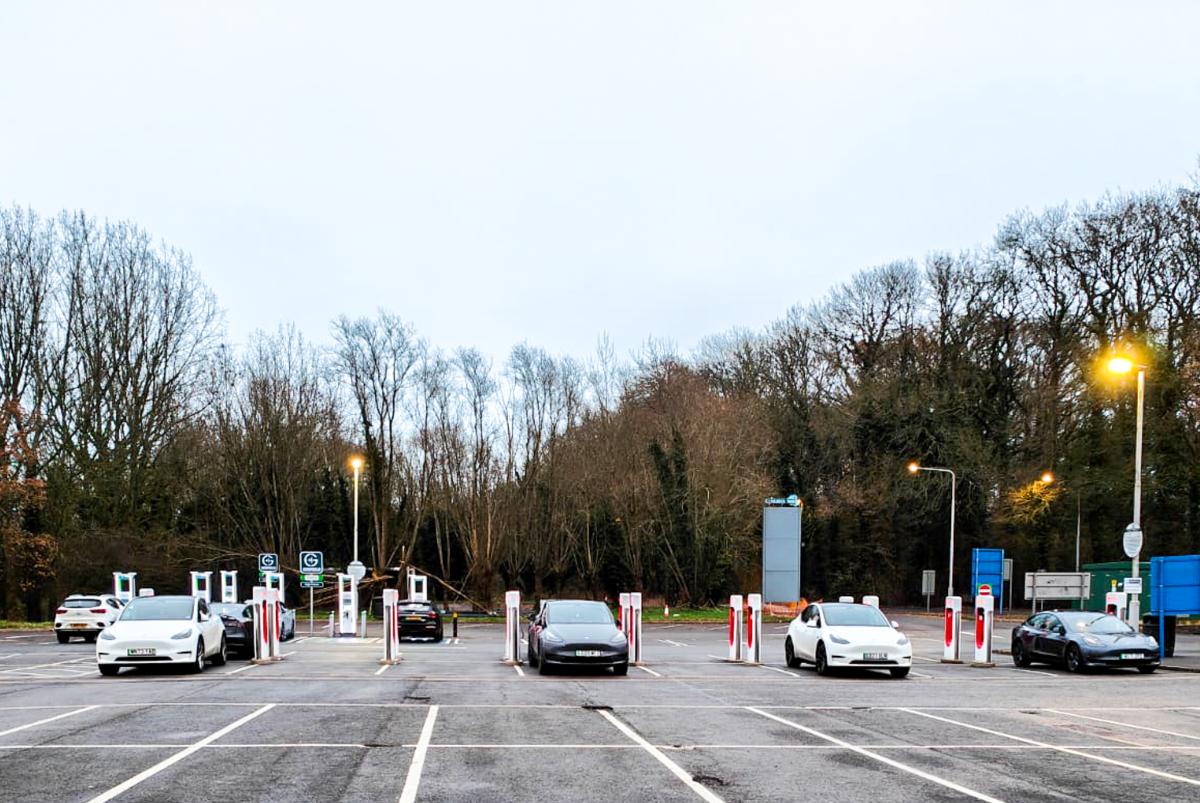
There are times however when we need to undertake longer journeys which take us beyond the range of our vehicle’s battery, meaning we need to rely on public charging stations to top up our batteries. Public charge points can now be found in car parks, supermarkets, cinemas, pubs and restaurants as well as at service stations and other sites. Sadly though, not all of them are in working order and some are easier to use than others.
A recent survey found that in the past 12 months, around 83% of UK drivers have struggled with public charging issues such as fully occupied charge points, technical difficulties due to the charging station being out of order, or an issue with the payment method. Thankfully, as the number of EVs on the roads increases, so to does the number of charge points but on busy routes or sites, there is always the possibility that all charge points may be in use when you arrive to charge your vehicle. This can be avoided to a certain extent by using Apps such as Zapmap, or PlugShare which will not only show where your nearest charge point is, but will also display information such as the number of available points at any given time.
An increase in the numbers of public charge points will inevitably mean more technical issues with the chargers and it would appear that the number of trained maintenance technicians is becoming a challenge for the charger owners. This should become less of an issue as more technicians are trained and gain hands-on experience of repairing and maintaining the charging equipment. If you come across a charger which is not working, please take time to report the issue, as the operator can only react to an equipment failure if they are aware of the problem.
Most public charge networks have their own make of charger and potentially their own app which you would be required to download and open an account with before you can use one of their chargers and this is where charging an electric vehicle becomes more complicated. There are literally dozens of apps available ranging from the major network apps like ChargePoint, Volta, Shell Recharge, EV Connect or BP Pulse to small regional ones. For ease of use it is not unusual for EV drivers to download and use three or four apps as there is no single app which can be used for all networks. Other apps such as Octopus Electroverse and Zapmap are also popular, particularly in the UK, as they give access to a wide range of networks and the convenience of checking availability and paying for charging across multiple networks with a single account and payment card. Some of these apps can be somewhat complicated when it comes to using them. It is also worth noting that they all require a strong internet connection to access the app.
Some newer models of public chargers do not require you to download an app as they offer contactless payment through a bank card, which simplifies the transaction and removes the need for an internet connection. This ease of operation and customer feedback will hopefully encourage the manufacturers to adopt this tap and pay method of payment for future transactions. It would still be wise to download an app to your phone to give you information on charging station sites and the availability of chargers on that site.
Using a public EV charger should not be difficult and it isn’t once the user gets used to using the required app. It can however be challenging for someone who is new to using a public charger to charge an EV and will be a new experience for many people as more drivers enter the world of electric vehicles. Using a mobile phone and a piece of unfamiliar charging equipment, particularly during the hours of darkness or when the weather is particularly inclement, can be very daunting for someone who may not carry out such transactions regularly. A simple operation which only requires the driver to plug in the cable from a charger, press start and then use a contactless bank card to pay for the transaction, must be less intimidating and more customer friendly. It is very often wise when introducing a new technology such as using a public charger to charge an EV, to use the old maxim which states, if you want something to work, keep it simple!
If you are looking for help with any electrical issues, you may find some of these services useful: