
Hybrid or EV?
As the government’s cut-off date of 2035 or thereabouts looms closer, there is naturally an increase in ultra-low emission vehicles. The government’s aim is to see the sales of all new vehicles using fossil fuels to be stopped and all new cars after that date to be fully electric. That is not to say that only electric vehicles (EVs) will be legal to drive after this cut-off date. All cars sold before the cut-off date will still be legal and available for use on our roads, although they will inevitably be made more expensive to own and run as time passes. Increases in road tax and fuel tax along with the cost of both petrol and diesel will be used to discourage us from buying and running second hand petrol and diesel cars by making them more expensive to run than the alternative EVs.
For those of us who don’t enjoy being told what to do and how to spend our hard earned cash, let’s look at the logic behind ultra-low emission vehicles and make up our own minds what’s best for us. What are the options and what are the benefits of each option?
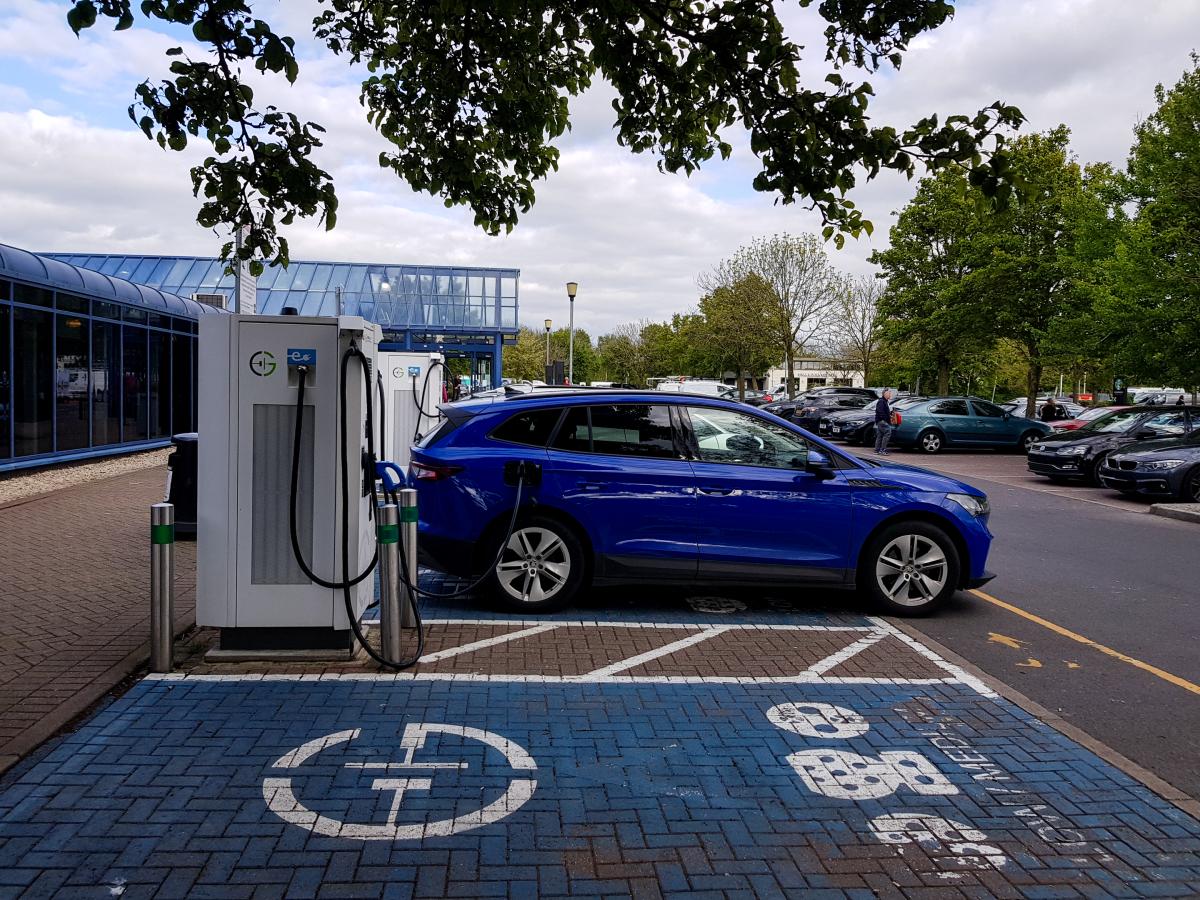
We are faced with three options, Hybrids, Plug-in Hybrids or fully electric vehicles and it would seem that they are not a one size fits all solution. All three options are probably the best option for some of us but not others, so let’s look at the benefits or otherwise of the three solutions.
A hybrid vehicle or to be more precise, a self-charging hybrid has a small battery and an electric motor which is there to boost the efficiency of a petrol or diesel engine which remains the vehicle’s primary means of propulsion, but short distances of pure electric range should be achievable in the city. A self-charging hybrid will recharge the battery by either using the internal combustion engine or through regenerative braking. Regenerative braking allows energy that would otherwise have been lost under braking or lifting off the accelerator to be diverted to the battery to power the electric motor. This makes a hybrid ideal for stop-start city traffic. A hybrid will be more efficient than a petrol car, and more economical than a diesel in town, but will make little improvement to carbon emissions.
A plug-in hybrid vehicle (PHEV), uses a battery to power an electric motor and either petrol or diesel to power its engine. The battery pack in a plug-in hybrid can be recharged either at home or on longer journeys via the public charging network. Due to its larger battery pack, a plug-in hybrid is capable of traveling further on electric power than a hybrid. A PHEV would normally achieve around 30 miles on battery electric, with around 50 miles possible in some models. When the battery runs down, the petrol or diesel engine will take over to power the vehicle and it is this feature that takes away the “range anxiety” and gives anyone reticent to switch to a fully electric car, the confidence to move to a vehicle which has a fossil fuelled backup which is refuelled when necessary like a conventional petrol or diesel car.
Most of us drive somewhere between 10,000 and 12,000 miles per year and 10,000 miles per year equates to an average over 364 days of around 27.5 miles per day, well within the range of most plug-in hybrid cars. This would mean that a great deal of our day to day driving would be done using battery power rather than petrol or diesel. This would make a plug-in hybrid a very economical option for short town or city journeys and an excellent provider of emission free motoring which pollutes many urban areas. At the other end of the scale, adding a substantial battery to a petrol or diesel car has the disadvantage of adding weight to the vehicle, which in turn has a negative effect on fuel consumption. It would therefore mean that on longer journeys a plug-in hybrid would be less economical than the petrol or diesel engine version of that car. In using more fuel, a PHEV will also contribute more carbon emissions than its conventional equivalent, which rather defeats the purpose of the whole “emissions saving” electrification of our transport. It has to be said that manufacturers are now fitting larger batteries to plug-in hybrids, giving them a longer range on battery electric, but exaggerating once again the fuel consumption differential on longer journeys. If most of your driving is done locally with journeys of between 20 to 40 miles per day, a plug-in hybrid might be a good solution to ease the inevitable transition to a fully electric vehicle. If on the other hand you are a regular motorway driver, maybe not so much.
It appears that fully electric vehicles are going through a “Marmite” phase in their market. People either love them or hate them. Despite that, sales of electric vehicles (EVs) in the UK are increasing year on year. There are now over 1,000,000 fully electric cars on UK roads, an increase of 18% from 2023. EVs accounted for around 15% of new car registrations in March 2024. Despite these rising numbers there is still a considerable proportion of the motoring public in the UK who are resistant to switching from their tried and trusted fossil fuelled chariots.
The main stumbling blocks appear to be the cost of purchase of an electric vehicle and a fear of being caught out between charging points and running out of battery. Electric vehicles are more expensive than their petrol or diesel equivalents, there is no denying that, although there are a number of more affordable models coming on to the market now. This shift in the market will make EVs more accessible to the average motorist and as the second hand market for EVs matures this will bring even more lower cost options.
Zap-Map tells us that as of April 2024 there are 61,232 electric vehicle charging points across the UK, a 45% increase since April 2023 and that number will continue to grow as the infrastructure develops to meet the increasing demand. That increase in charging facilities should by now be reassuring potential EV buyers that if they exercise the same level of care they have traditionally given to ensuring that they do not run out of petrol or diesel, there should be no reason for them to run out of battery power. This should help to alleviate “range anxiety”.
EVs are sometimes slated by their detractors as they use electricity generated by power stations fired by gas or increasingly rarely by coal, which means that EVs are responsible for increased emissions which detracts from their green credentials. The continuing decarbonisation of our electricity generation and the move to wind, solar and other renewable energy sources means that electric vehicles will become even cleaner as the years go by.
If you are looking for help with any electrical issues, you may find some of these services useful: