
Rewiring a Home: What’s involved?
Rewiring can be disruptive and expensive but it’s a potential lifesaver
It’s well worth having the existing wiring inspected before you buy a property. That should give you a sense of what work is required and, crucially, if the existing electrical system is safe to use. A total rewire of a home is a major project. It’s always recommended a whole house rewire is carried out by a qualified electrician rather than attempting to deal with it yourself
Is it always necessary?
Appearances can be cruelly deceptive. For instance, in an older home alongside the retro 1950s kitchen cabinets and yellowing wallpaper you might expect to find light fittings that look like they have come out of the ark. But what if they are ultra-modern? On the one hand, you might be the lucky beneficiary of a complete rewiring of the home by the previous owner. On the other, it might be those sleek brushed chrome fittings are merely a façade concealing the original dangerously frayed wiring. That’s why it’s essential to get electrical systems checked by a qualified electrician regardless of the apparent condition.
If a house hasn’t been rewired for 25-30 years or more, it’s more likely to need wiring work to bring it up to current standards. But if you’re buying a house built in the last 30 years, it’s highly unlikely to need a complete strip out and rewire. Check if there are certificates for any partially modernised electrics. Since January 2005, all major electrical work must be compliant with Part P of the Building Regulations, often referred to as the IET (Institution of Engineering and Technology) Wiring Regulations. They set the rules for home wiring to ensure it’s safe. Local searches by your conveyancing solicitor should find any copies of electrical installation certificates for completed work or the sellers may have copies filed away.
Signs a rewire is needed
There are typical signs to look out for that suggest a rewire may be necessary:-
- Flickering or dimming lights can indicate loose connections or deteriorating wiring.
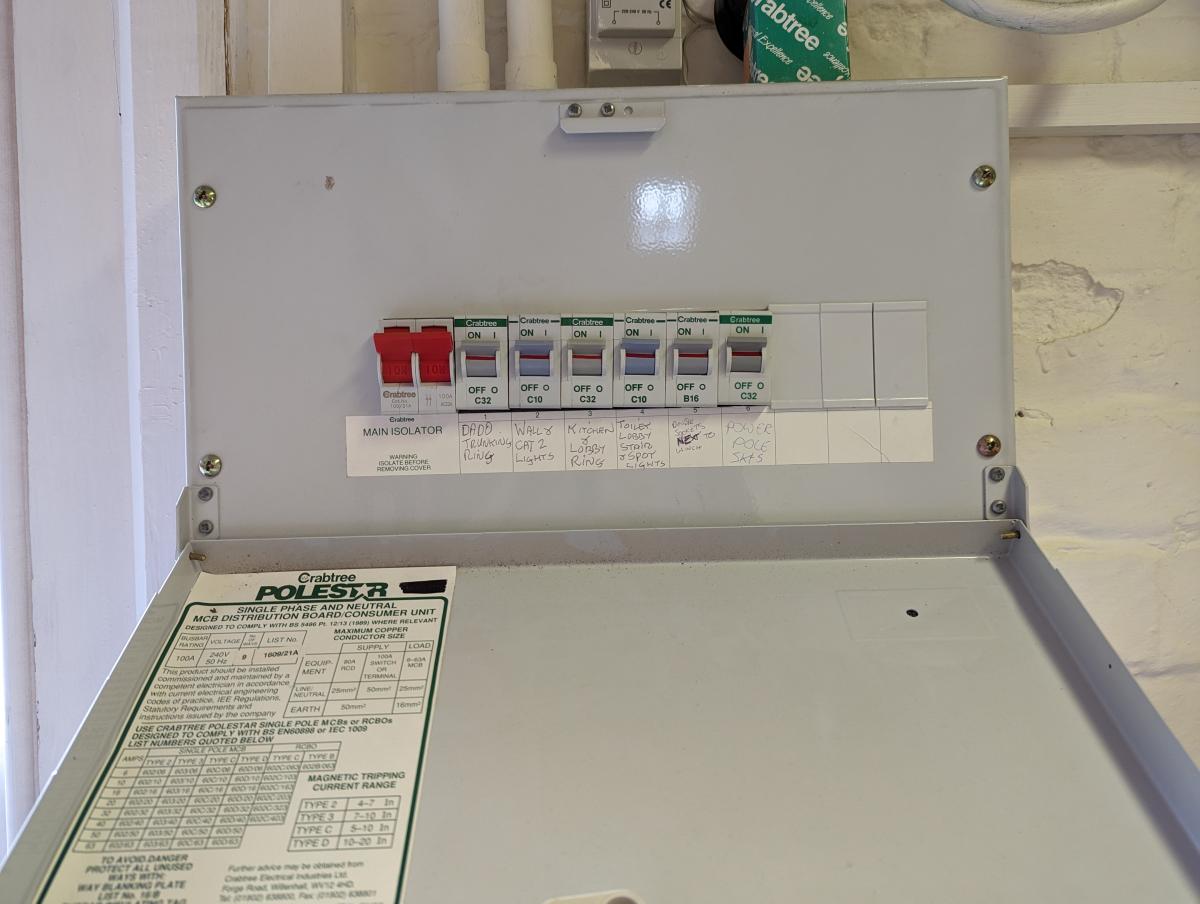
- Regular tripping of the consumer unit (also called the fuse box or distribution board) can signify overloaded circuits.
- Visible cabling covered in black fabric, rubber or lead means the wiring is outdated and potentially dangerous, so will need compete replacement. Since the 1960s domestic cabling has been encased in insulated PVC sheathing either grey or white in colour.
- Sockets have rounded plugs instead of three-pin entries, another sign of wiring long past its sell-by date
- Burning smells or scorch marks around plugs or sockets. Plugs getting very hot. All signs of electrical faults and potential fire hazards.
- Less than two double socket outlets in each room and/or reliance on plug-in extension cords, suggesting sockets may be overloaded. Lack of outlets is a sign it might be time for an upgrade.
- Fittings are loose or dangerously located, for example over the hob or over the bath.
- The consumer unit has a wooden back. Since 2016, newly installed consumer units needed to be enclosed in a non-combustible cabinet, usually metal. An ancient fuse box is a sure sign that the whole property will need complete rewiring.
Although there are simple DIY socket testers on the market, they cannot detect several potentially serious wiring faults, such the earth and neutral wires being mistakenly swapped. These require more advanced testing equipment.
Testing, testing
It’s essential to hire a qualified electrician to check if the wiring is safe and up to standard. But what sort of checks should you ask for? An Electrical Installation Condition Report (EICR) will identify the need for any rewiring in a renovation project – or, indeed, your existing home. It aims to find any damage or wear and tear that may cause electric shocks, fires or other safety hazards. It also highlights any wiring work that doesn’t meet IET electrical wiring regulations. These reports cost around £150 to £300-plus depending on the size and location of your property.
There are two types of EICR report:
- Visual condition report: This involves a visual inspection to confirm the electrics are safe. It includes checks such as ensuring electrical sockets aren’t overloaded and appliances have Residual Current Device (RCD) protection. But this type of report is only suitable for properties that have recently been fully tested.
- Periodic inspection report: This includes a full inspection and testing of electrics in a property, including circuitry hidden behind walls. It is recommended this inspection is carried out every 10 years for a private property and every five years for a rental home.
The UK’s IET Wiring Regulations (18th edition) are the national standard for domestic electrical work. These regulations are frequently updated. There is no requirement for existing electrical systems to meet the latest new build standards. Even a relatively new home is unlikely to fully comply. This means being told by an electrician that wiring is “non-compliant” with existing standards isn’t necessarily a cause for alarm, but it is important to fix or replace any faulty or outdated electrical wiring flagged up as potentially dangerous.
During an EICR an electrician must immediately make safe any faults they discover are an immediate danger to health, such as an exposed live wire. Often a full rewire can be avoided if the existing cabling is sound and able to carry any additional loads. Instead, it may only be necessary to update with a modern consumer unit and upgrading the earthing and bonding. If you are planning a new extension, your electrician will create new circuits, connecting them to your consumer unit.
What does rewiring a house involve?
Rewiring a house can take between two and 10 days. And cost between £3,500-£9,000-plus, depending on the size and complexity of the project and quality of fittings you specify. The work involves removing all the old wiring and installing new fixed cabling. It is typically carried out in two stages, known as fixes.
- First fix: This stage involves all the work to strip out the old wiring, replace it with new cabling and install a new consumer unit. This work typically involves cutting channels into walls and lifting floorboards to hide the fixed cabling. Back boxes for switches and sockets are added, power and lighting circuits are rewired. You might also need cabling for smoke alarms, automated lighting, CCTV cameras, burglar alarms and outdoor lighting. The first fix needs to be done early in a renovation project and co-ordinated with other trades, especially plastering and redecorating.
- Second fix: This stage happens after all the plastering is finished. It involves wiring in the switches, sockets and light fittings. Plus, connecting equipment such as cookers, extractor fans, heating controls and electric showers. Finally, the electrician connects everything to the new consumer unit and tests the system.
Electricians registered as “competent persons” can self-certify that their work complies with Building Regulations Part P. After a complete rewire, the electrician should hand you a signed and dated electrical installation certificate. This certifies that everything meets Part P standards. Look out for electricians affiliated to a body that gives them the necessary registered installer status, such as NAPIT, NICEIC and ELECSA.
Planning the rewiring project
Before work starts, it’s a good idea to map out where electrical fixtures and fittings will go. Give your electrician a clear drawing for each room showing where you want each socket, switch, light fitting and electrical point installed. This will save you making costly changes later in the project. If you want anything different from standard white plastic fittings or a simple pendant light in each room, for example LED lighting, specify this at the start. Try to future-proof your electrical wiring for the next 10 years or so. Will you need more electrical sockets for plug-in devices or additional fixed cabling for smart home technology? Bear in mind wireless solutions are reducing the need for conduits and cables.
If you are looking for help with any electrical issues, you may find some of these services useful: